An Enchanting Wilderness in the Heart of Central India
Before visiting this place, even though I had read about the sal trees in Kanha, I firmly believed that central Indian forests, predominantly “broad leaf deciduous”, would be devoid of any sort of greenery during summer. However, as soon as we approached the vicinity of this National Park, my skepticism evaporated just like a futile drop of water does under scorching sun; The “Sal” trees were indeed making the landscape look greener than I imagined.
In the late April 2019 with me, I had my wife, my four-year-old boy and my in-laws. Our personal guide and tour manager, Wilson, was driving us in his white Mahindra Xylo. Everyone was excited about this vacation, and I was no different. Before owning a resort in the buffer zone of Kanha, Wilson was earlier working as a Guide with MP Tourism and he specialized in tiger tracking.
My wife and I, on the other hand, are avid Nature Lovers. Our home ground for wildlife watching had mostly been around the Nilgiri Biosphere Reserve, which spans the National Parks of Bandipur, Mudumalai and Nagarhole as well as the Wildlife Sanctuary of Wayanad. Those Western Ghat ecosystems are home to the largest intact tiger population, however sighting them was more challenging because of inaccessibility of core zones to tourists and less tourist-friendly tigers often are too shy and timid. However, we did have some very close encounters with the tiger in these forests, but the circumstances were not that great to photograph the grandeur beast. Nevertheless, the Western Ghat Ecosystem is as refreshing as it is diverse. The countless encounters we had with Asiatic elephant herds and Malabar Giant Squirrels in these forests and each time we did, the excitement and admiration was never a bit less than when we saw them for the first time. We had decided to visit Kanha in the summer of 2019, not with an intent to compare it with the jungles we frequent more often, but to broaden our understanding of wildlife with an experience of a central Indian Jungle. Unlike most other Kanha visitors, we were there to learn about this forest and its Ecosystem and sighting the tigers was not our sole objective.
The flora and fauna of this mesmerizing landscape is beyond words to describe, but I am unable to just give up the temptation of documenting our experience with my humble writing and amazing photography by my wife. The highlights of our experience are as below, which of course will unveil further as the reading of this memoir progresses.
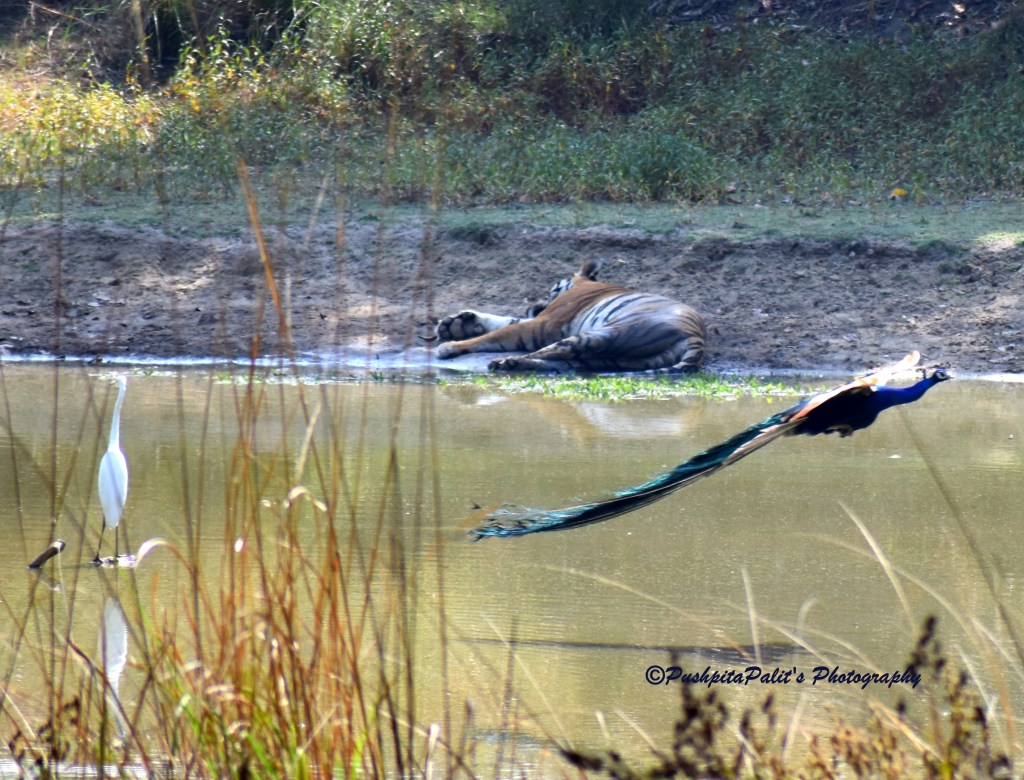
- We had three independent tiger sightings in two safaris in Mukki Zone, Kanha. What made two of these three sightings more exciting was the thrill of tracking through alarm calls that eventually gave up their positions after relentless effort, perseverance and patience by our guide and driver. The third sighting involved no movement and a very predictable huge male was sleeping beside a water hole.
- We had the opportunity to go hiking on a nature trail beside the Banjar River and the adrenaline rush was unimaginable when we discovered pugmarks and evidences of a Barking Deer kill. When you are on foot and you know the top predator of the forest is on the prowl around you, the thrill cannot be described in mere words.
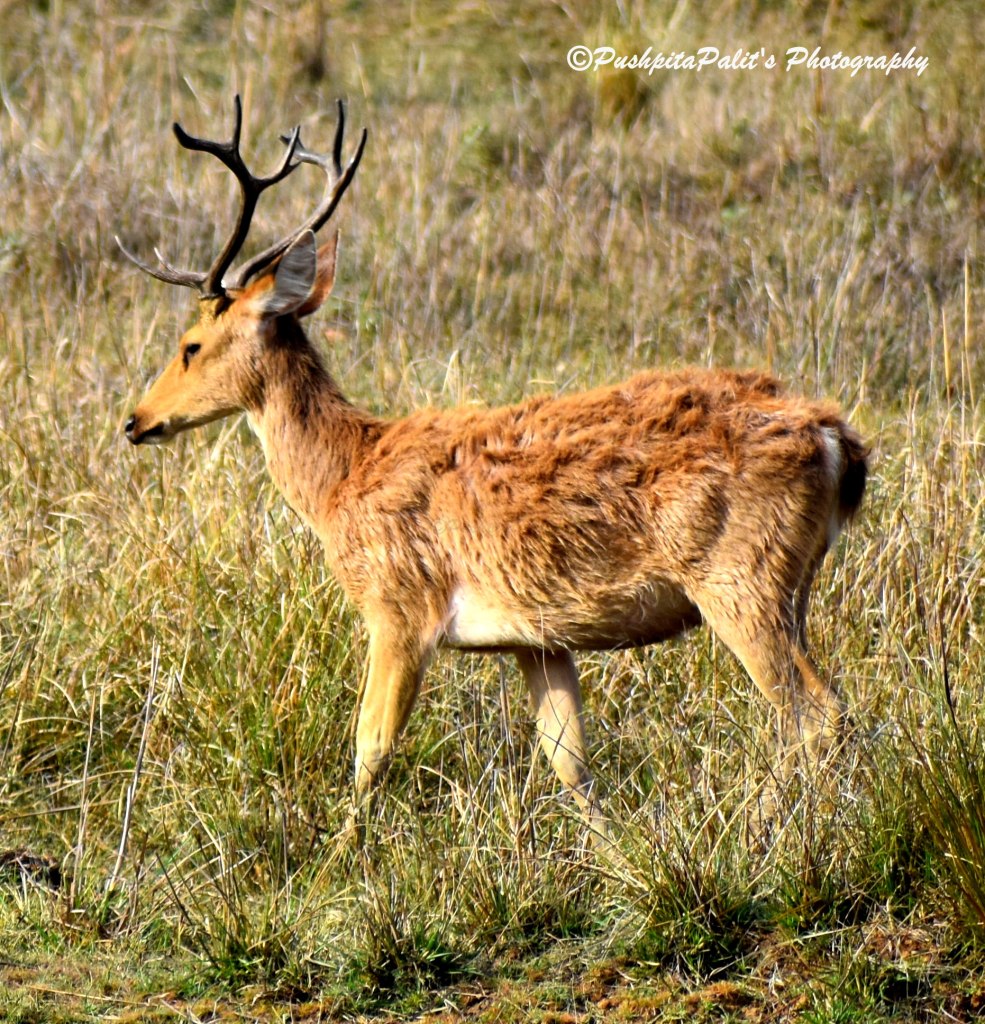
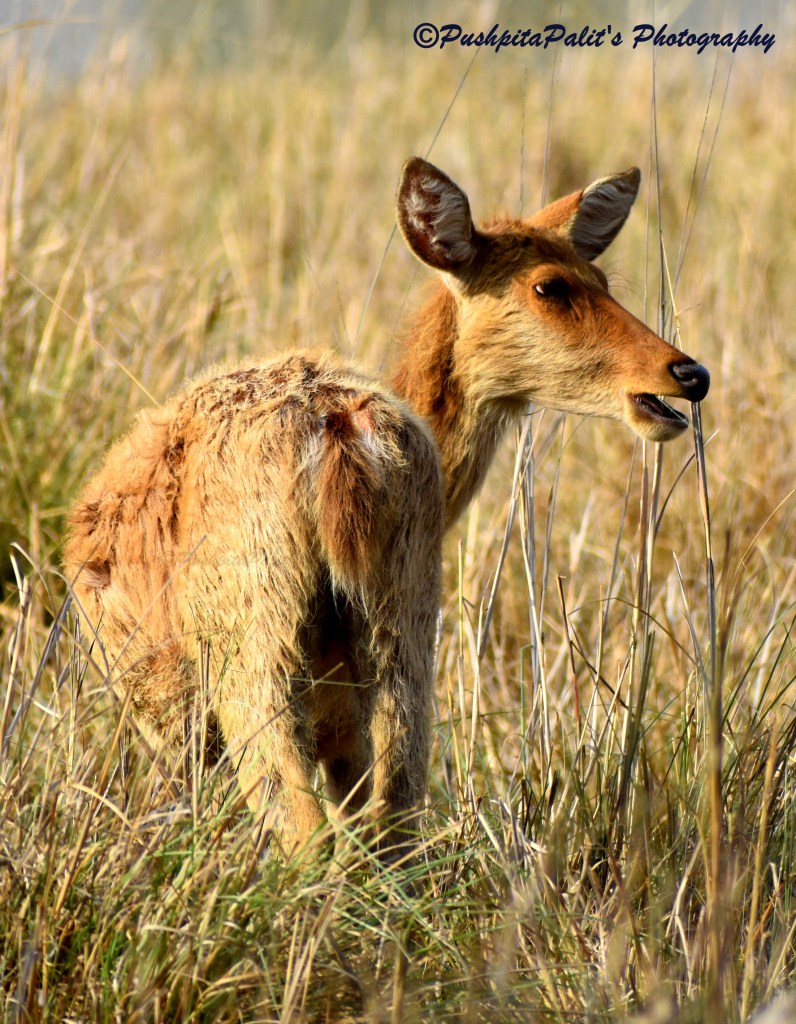
- We spotted and photographed innumerable herds of Kanha’s flagship deer species (the hard ground Swamp Deer – locally called as Barasingha). It is this National Park that saved this beautiful ungulate with golden fur from extinction. Now they number in thousands and can be found grazing on open Meadows.
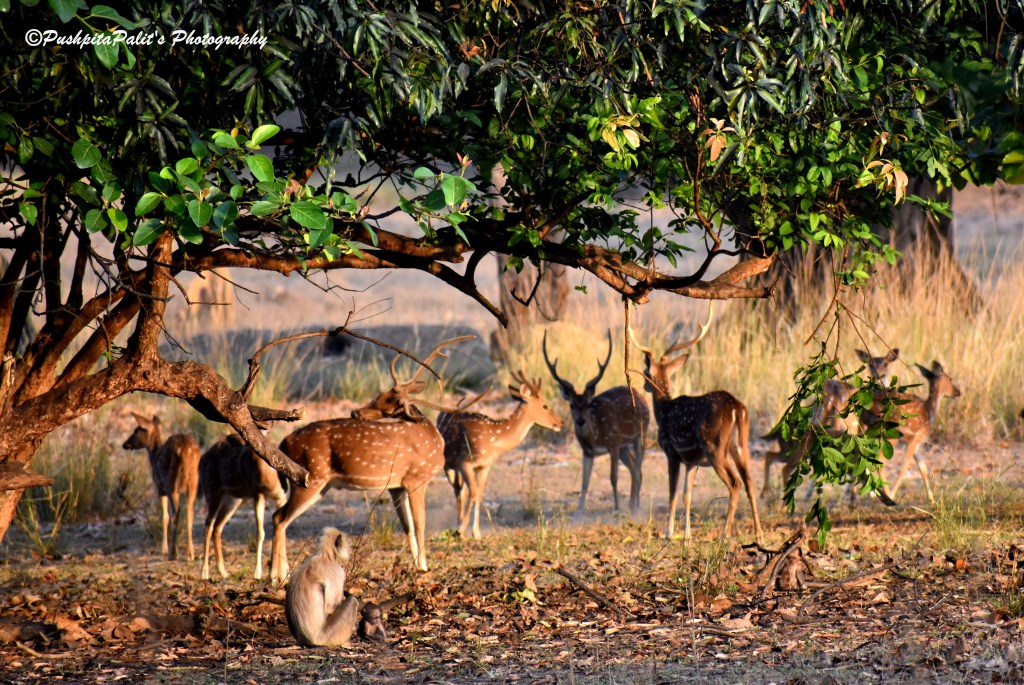
Our Resort was located in a Village called Bamhni, situated in the buffer zone of Kanha Tiger Reserve, and on the fringes of the Core Zone of Mukki Range. To get there we had to drive through a sizable forest area, teeming with wildlife for 15 Kilometers. We were approaching the National Park from Bilashpur, a bustling township in Chhattisgarh. The state border with Madhya Pradesh is roughly the landmark from where the buffer zone of this grand National Park started. As any other National Park and Wildlife Sanctuary in India, the sight of herds of Spotted Deer or Chital welcomed us and accompanying them were Langur Monkeys. This common deer species and the black faced monkey shares a very interesting relationship. The langur usually sit on trees and keep a better watch than the deer; when they see a Tiger or a Leopard, the alarm calls alert the deer feeding below the trees. Also, the Monkey are very fussy fruit eaters, and whenever they dispose half eaten fruits, the eager deer below gets a snack to eat.
Soon we realized that the sight of Deer Herds and Langur Monkeys was common everywhere. But what we encountered next not only baffled us, but also challenged what we knew earlier. Just hardly 5 Kilometers into the buffer zone on our way to the resort, a huge Gaur Bull was blocking the road. It was a lone animal and it was out in the open in broad daylight at 3 pm under the hot summer sun. We always knew from our Western Ghat Forest’s experiences that the Gaur or Indian Bison prefers to stay deep inside the forest and comes out in the open to graze only at night or early dawn. But here in Kanha, this animal was behaving differently! Mr. Wilson informed us that they can be found grazing in the open at any time during the day in summer. Only in the winters, these animals prefer to go to forests uphill and not found near roads and open grasslands.
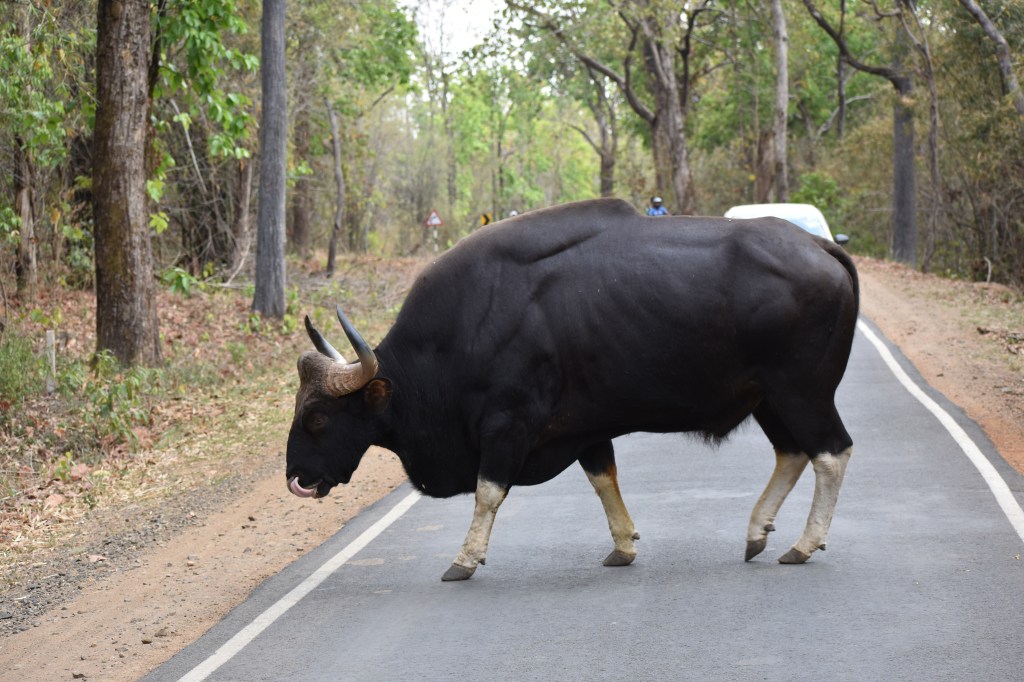
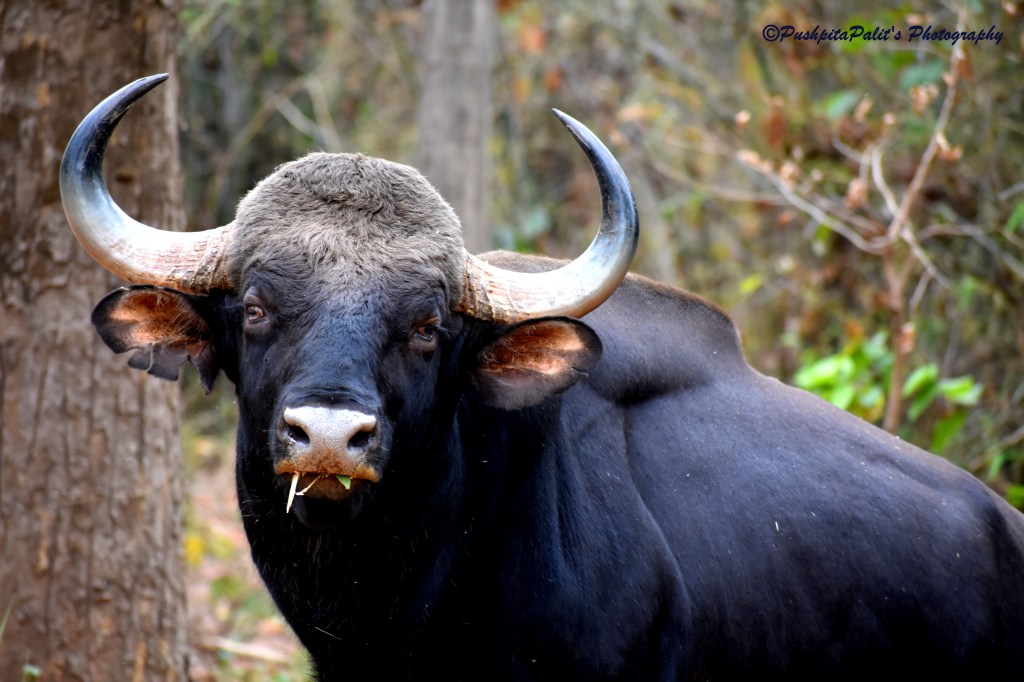
The Gaur Bull stared at us, and then made some slow yet significant effort to move its massive body clearing the roadblock. It was heavily muscular, and the black shiny skin helped to display the cuts and edges of his formidable shoulder muscles. It has always been a bewildering fact as to how adult tiger could bring down even the mighty animal we were witnessing in front of us. The animal constantly licked its nose to keep it moist and while doing so angrily stared at some noisy tourists in a private vehicle. Often such visitors are not educated and sensitive about how to behave on encountering wildlife. It was so annoying to see a man getting out of the safety of the vehicle to photograph the gaur with his cellphone camera. We literally had to scream and yell at the man to get him back into his vehicle. The angry gaur, gradually moved on, unprovoked thankfully! It walked into the thick bush before completely disappearing. We also noticed a herd of grazing Gaurs near the Mukki Forest Entry Gate, on an open meadow.
The resort was set up inside a village, though very much inside the buffer area. The accommodation was very basic, with no fancy amenities that we craved for badly. If you take the opinion of just me and my wife, we hardly would even need a Television while staying in the wilderness. When staying inside a forest, we rather would enjoy the call of a barking deer at night over an Indian Premiere League Final. We settled for an early dinner and soon retired to the comfort of our room. The next morning, just two of us planned to go on a Nature Trail, a hike that was supposed to be 7-8 Kilometers Long.
“A walk through the JUNGLE lets your Soul and Nature to MINGLE”
We were out of our resort campus by 5:30 AM and met our guide Karan, at the periphery of the village where the forest began. He was already accompanying a group of enthusiastic Zoology interns. MP Government made strict rules for hikers who ventured on foot in the forest area and it is mandatory to have a designated guide. Our Guide Karan, a local from one of the tribal settlements in the region, was hired by MP Tourism as a guide to accompany tourists like us who are oblivious to the evident challenges and lurking dangers in these jungles. The “Bamhni Nature Trail”, likely named after the Village from where the hike started, though mostly known for bird watching, it was not very uncommon to encounter a tiger, leopard, dhol pack or the aggressive sloth bear.
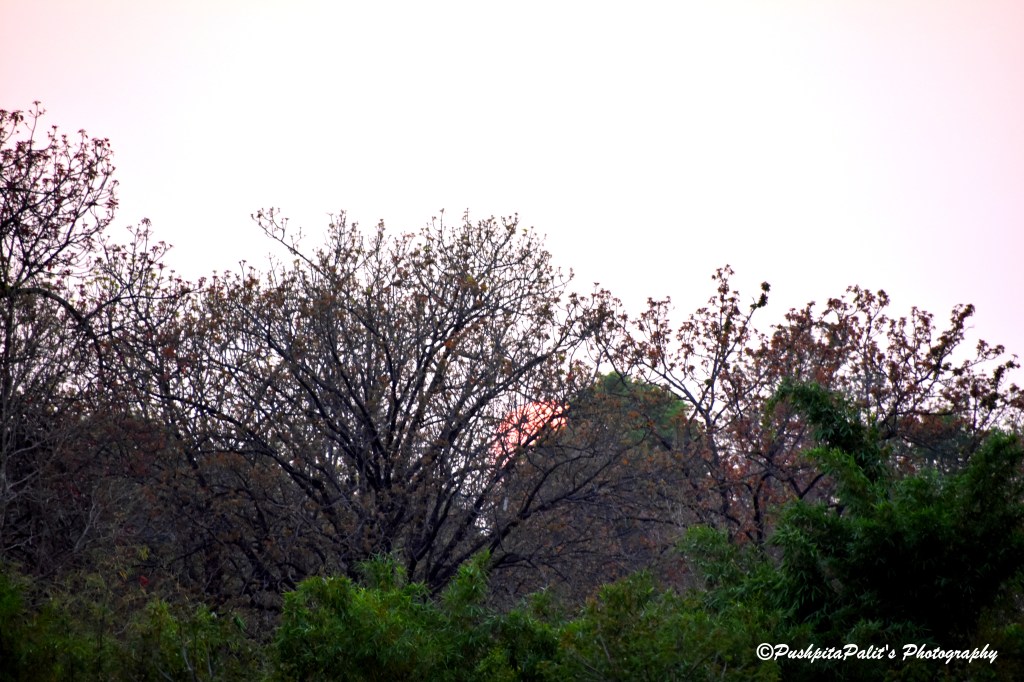
The forest was thick and strikingly Reddish-Orange shades from the leaves of Palas and Mahua Trees often interrupted the continuity of the predominantly green canopy, as if they were screaming for some attention. Termite hills dotted the forest floor dominated by blanket of dead leaves on the red colored ground attributable to the iron rich soil of Deccan Plateau. A closer look at the array of asymmetrically rising tree trunks and branches that separated the canopy above and the forest floor below, revealed very fine silky network of webs made by wood spiders; the dew droplets on the silvery fiber were glittering in the mild morning sun like precious gems do on priceless ornaments. Rising above the remarkable forest was a spectacular hill with a blunt flat top; the locals fondly called the hilltop “Bahmni Dadar” or “Sunset point”. The hilltop earlier used to be a picnic spot for tourists before recent Supreme Court orders on restriction of core zones within National Parks; Bahmni Dadar is now a strictly inaccessible area for tourists on foot or on vehicle. The Hill lies deep inside the gradually expanding boundaries of the core zone of the National Park, and always formed a distinct backdrop over this stretch of the forest.
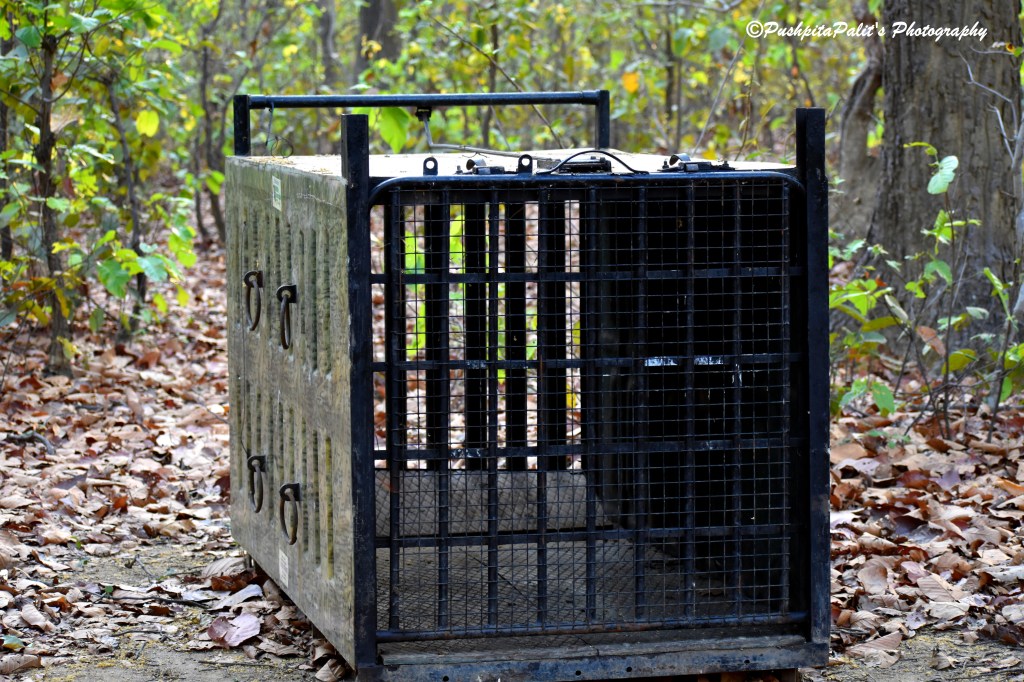
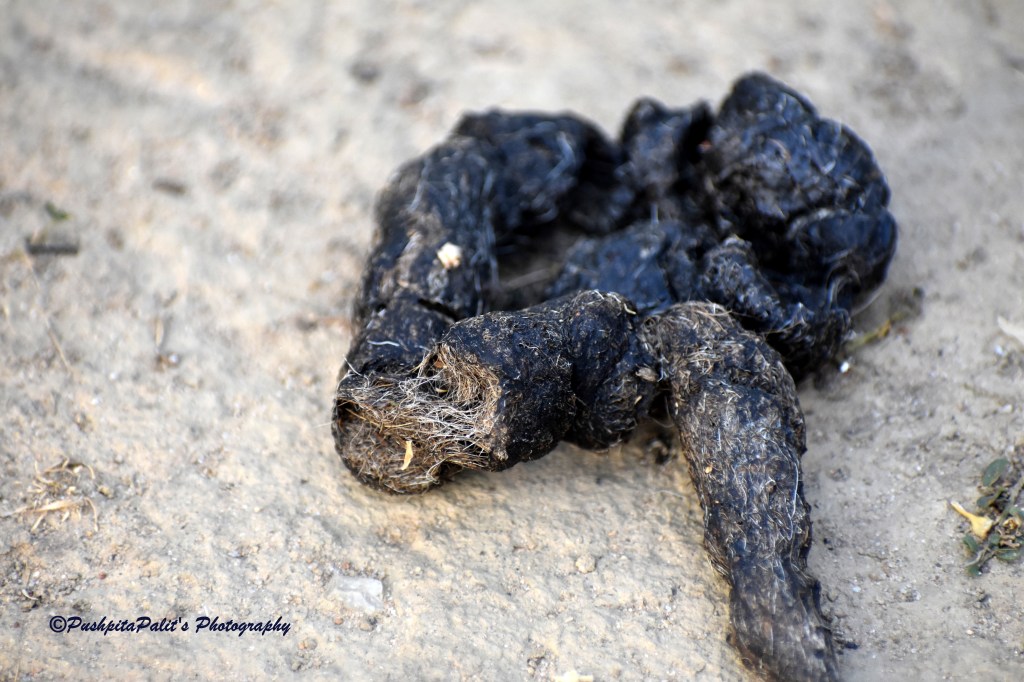
Hoofmarks of deer were very common observations along with scats of wild dogs. A zoology student helped us to identify from scats what a Dhol had been feeding on. The soft and less brushy hair in the canine’s scat seemed to come from chital deer. The Zoologist also told us that, had the canine eaten wild boar, the scat would have had hair that was bushy and spiny. Karan, with broad smile, informed us that there was a pack of 25 Dhol in the area we were walking. We also saw a trap cage used by forest department to trap animals for study purposes – an exercise that involves trapping the animal, tranquilizing it, and tagging it with Radio Collar so that it could be tracked and studied.
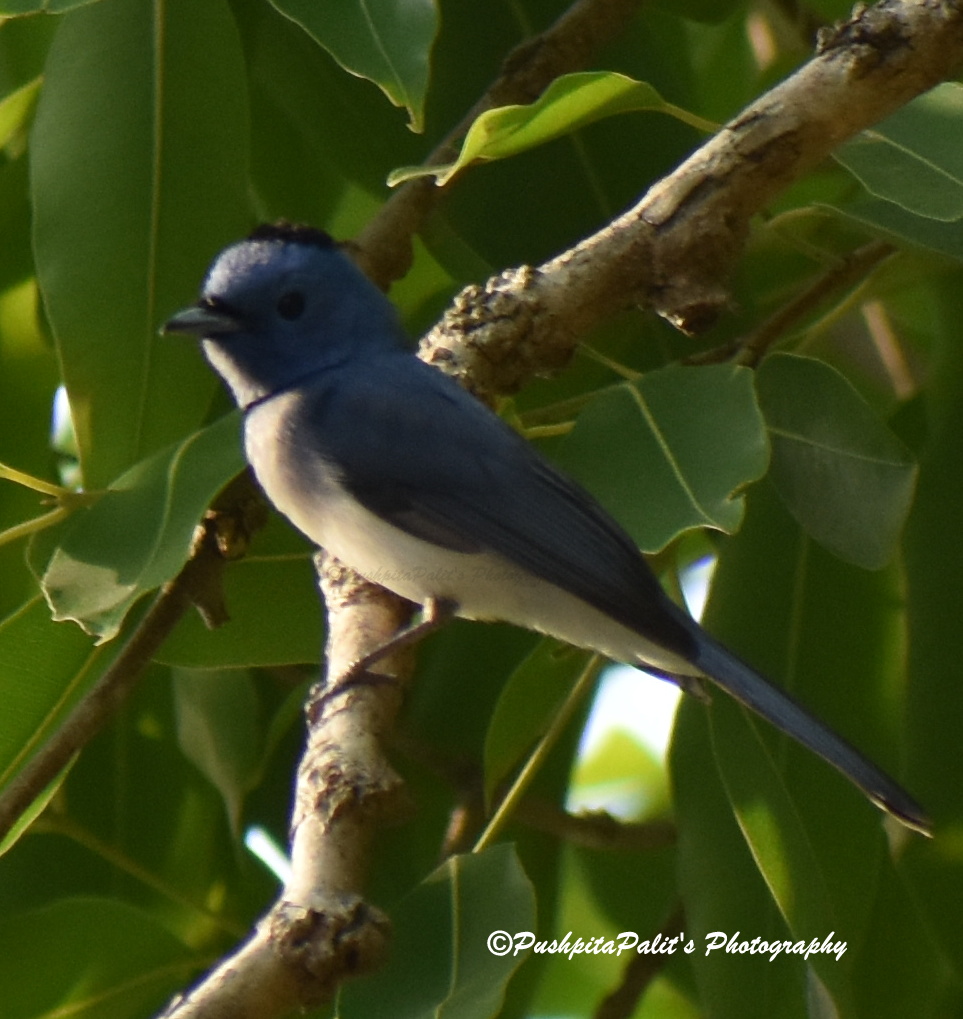
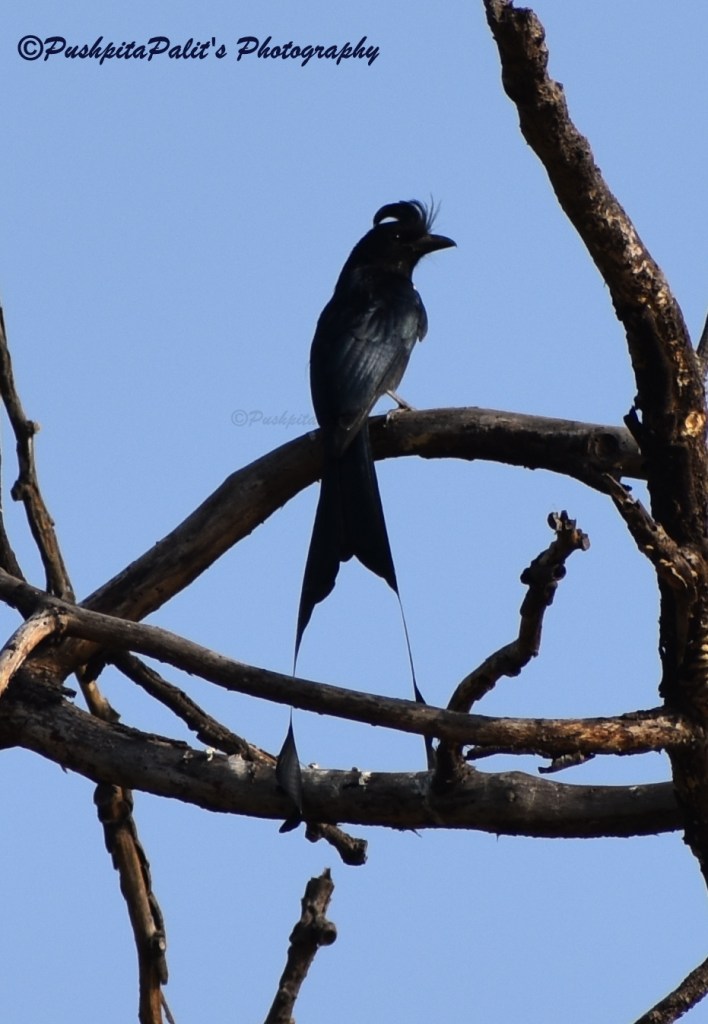
With all this fun and adventure, we also had the opportunity to spot avian species like Hawk Cuckoo, Indian Roller, Blue Thrush, Racket Tailed Drongo and Black Naped Blue Flycatcher. Among the raptors, we were able to spot included Crested Serpent Eagle, Honey Buzzard and Changeable Hawk Eagle. The loud flamboyant shrieks of the barbet broke the tranquility of the forest occasionally, though we could not spot the bird directly. At certain places, there was continuous mild chirping of songbirds that added melody to the serene calmness until abruptly being suppressed by overwhelming Cicada calls. The trail through these pristine surroundings took us to the rock laden sandy banks of the picturesque Banjar River. We continued on the trail along the banks of the river and nothing eventful happened until Karan stopped us on our tracks to point out to something on the sand.
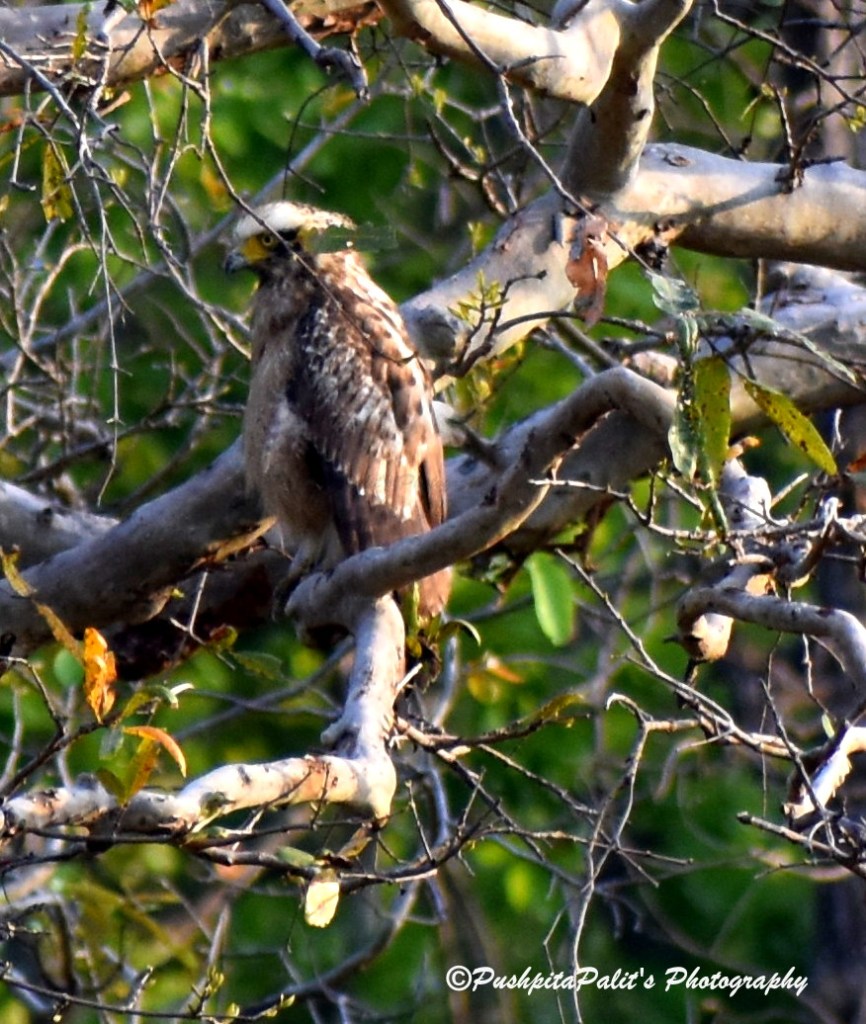
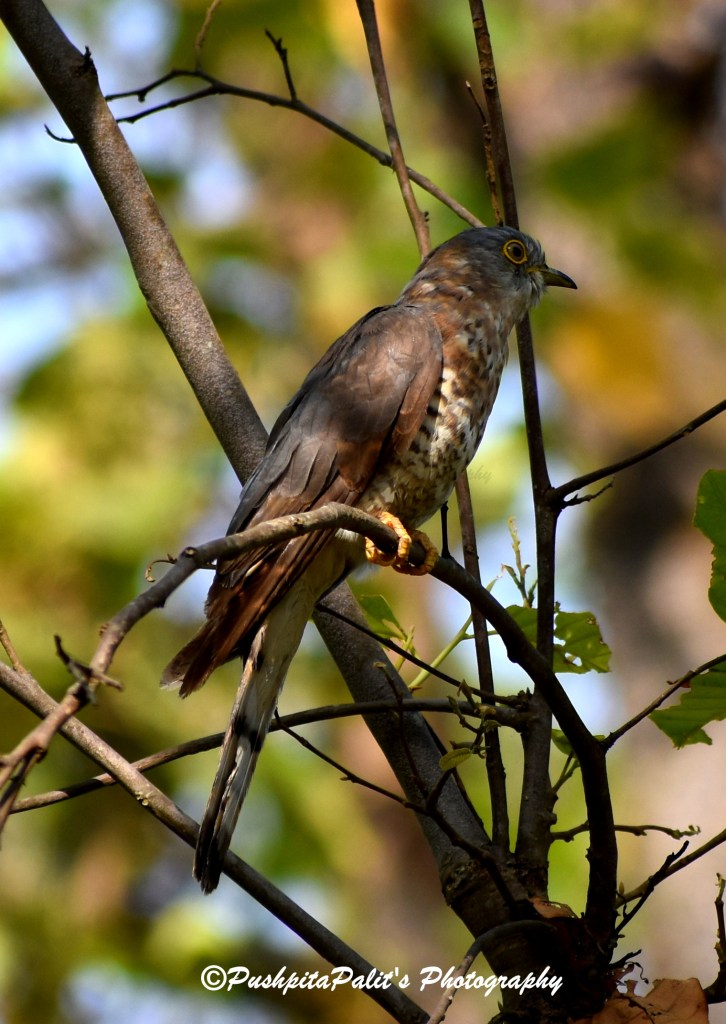
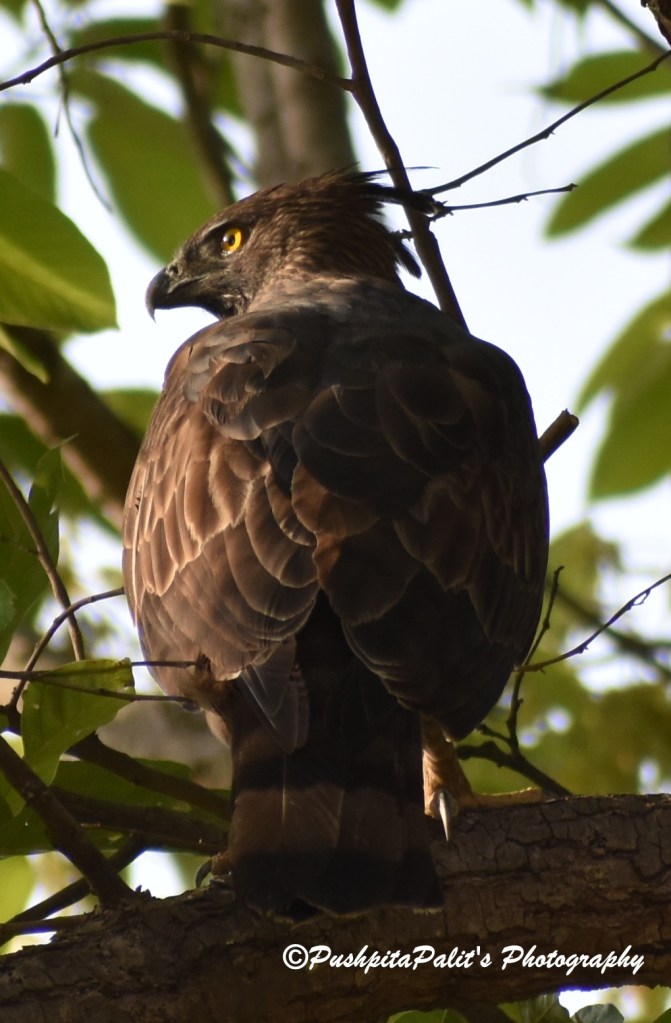
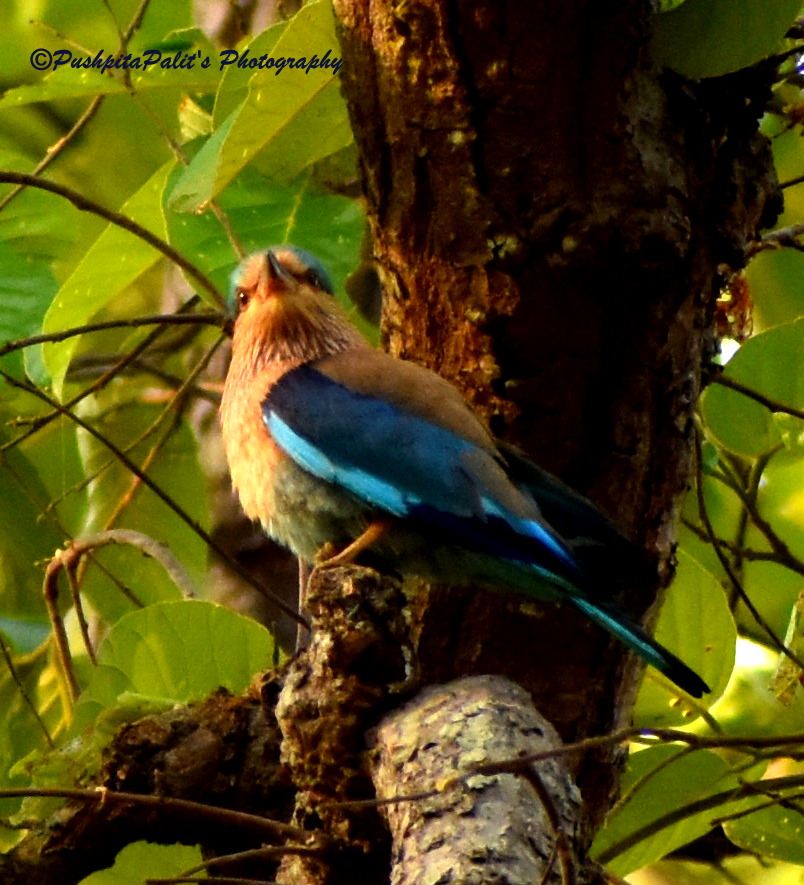
A well Blended Crested Serpent Eagle (Top Left), A Hawk Cuckoo or Brain Fever Bird (Top Center), A changeable hawk Eagle (Top Right)
A Black Naped Blue Flycatcher (Bottom Left), Racket Tailed Drongo (Bottom Center), Indian Roller (Bottom Right)
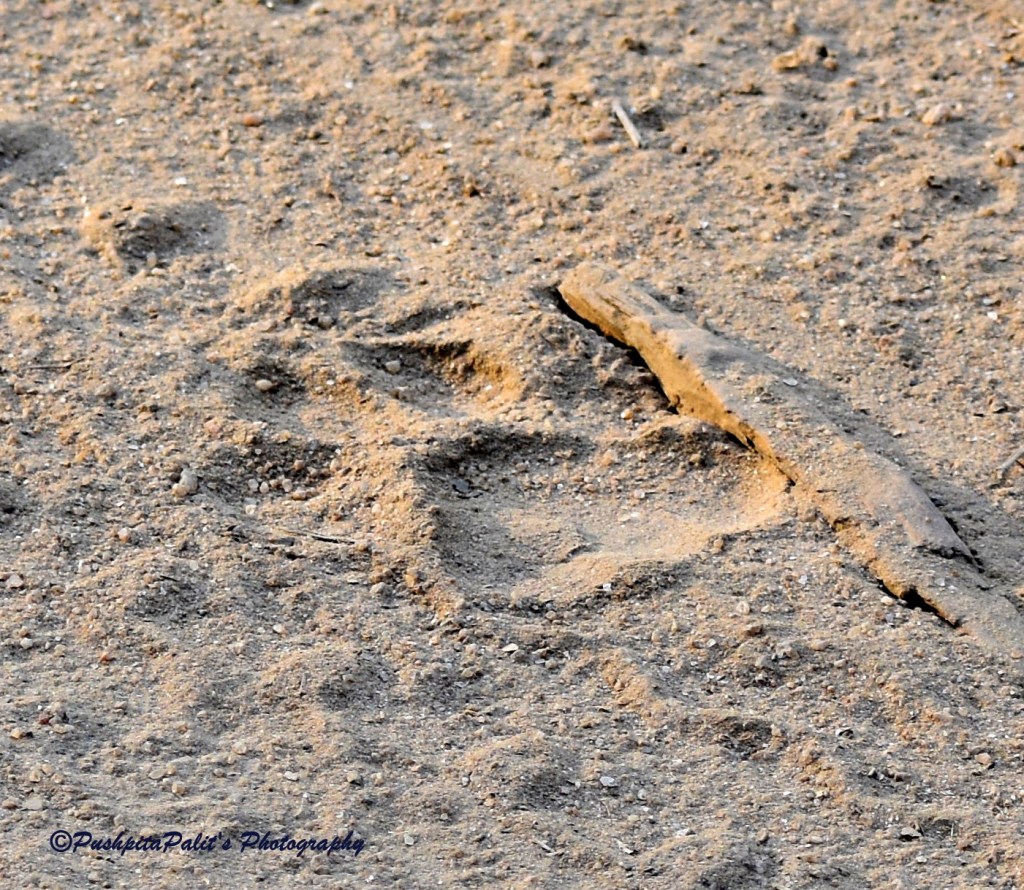
It was a PugMark, not very fresh but a day or two old, but nevertheless it was a PUGMARK!! Karan informed us that this is the territory of a large male known as “Umar Pani” and he is known to frequently patrol the area. Not very far away, on the stone laden banks of the river, we also noticed the evidences of a Barking Deer kill. None of us hardly spoke, since it took us some time to absorb what we were looking at. We were basically on foot in a forest where a tiger is frequently on prowl; I was so glad that Karan came with us.
The Summer Sun’s rage started taking a toll on us, and after more than two and a half hours of trekking, we ran out of water. We decided to make a hasty return to our resort.
We did two safaris, one in evening the same day and one morning safari in the following day, and we were truly amazed at the plethora of wildlife we saw. In particular, we were extremely happy with the health of the forest which was clearly indicated by the overwhelming ungulates (Spotted Deer, BaraSingha, Barking Deer, Sambar Deer and Gaur are the ones we sighted.) These form a very good prey base for the Tigers. The last Census indicated the presence of 96 Adult Tigers and 60 Cubs in this reserve. During each of the two safaris, the sightings of Chital Deer, Langurs, Barasingha and Gaur were too numerous to ignore. They were everywhere every time. The rest of this essay will just describe the selected remarkable encounters we had during the Safari.
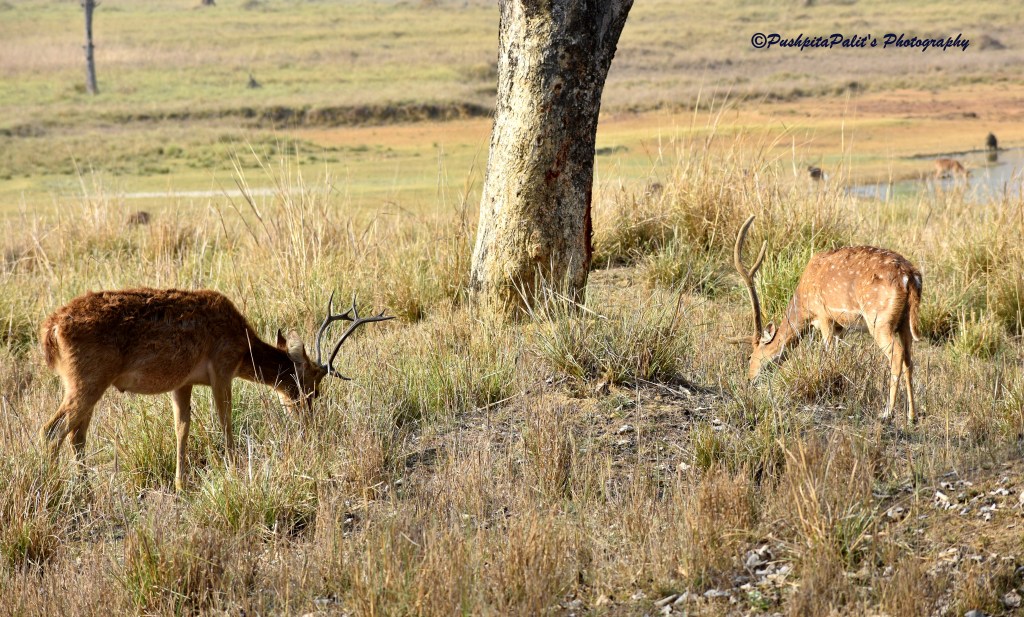
The Hardground Swamp Deer or BaraSingha is only found in Kanha NP.
The excitement and adrenaline rush was unimaginable when our guide told us we would shortly encounter BaraSingha herds as soon as we enter the meadows. Soon the thick forests of Sal gave way to an open grassland. The golden hue of the plain topology was attributable to the grass toasted by scorching summer sun. Quite a few hundred meters away, there was some movement and there were clearly some kind of deer-like presence among the herds of spotted deer. They were not spotted deer after all, and they were much larger. They blended better than the Chital deer in the golden meadow. Unlike the Chital or Spotted Deer, they feed exclusively on the grass and never ever venture away from these meadows. The golden hairy coat gave it some resemblance to the Dog Breed known as Golden Retriever.
Although locally they call them the Barasingha, it is less likely that the antlers would indeed have the 12 points as the name suggests. Guess that’s just a sort of Local Approximation. Going by the name and the logic behind it, a spotted deer stag can also be a Barasingha. However, I fondly remember what once William Shakespeare said – “What’s in a Name?”
The Hard Ground Swamp Deer or Barasingha, once roamed in thousands and millions in grasslands of Central India. But due to over hunting and habitat loss, they were at the brink of extinction. Only some 20-30 individuals had survived and Kanha NP had played an instrumental role in preventing this species from permanently disappearing forever. On all meadows in this Central Indian Landscape, you can find them in herds small and big, often accompanied by chital. Kanha NP is home to thousands of this deer species found nowhere else on earth.
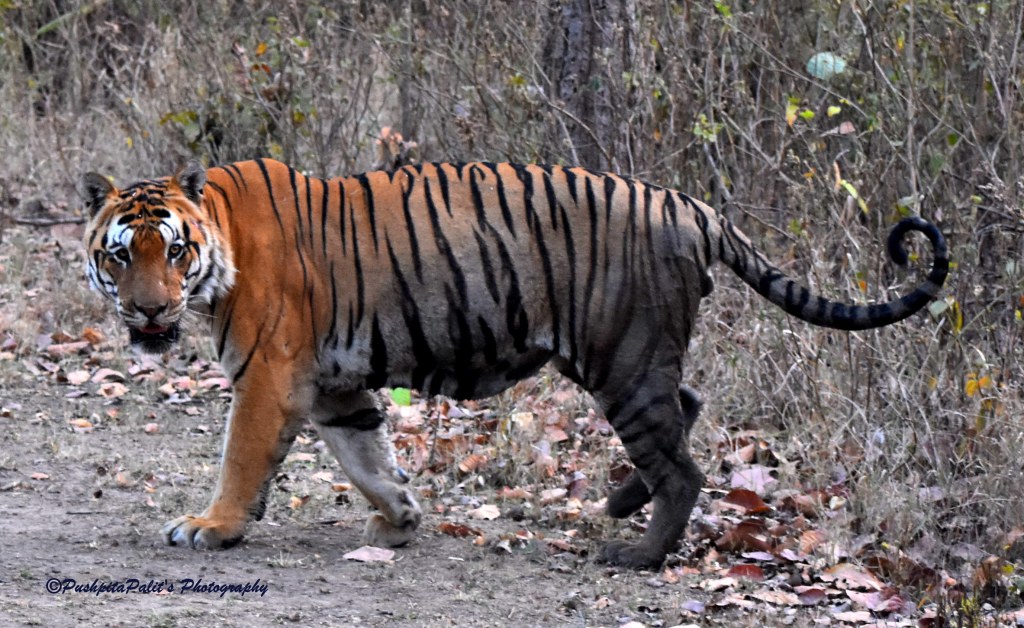
Umar Pani Male – “When a Tiger is on the PROWL, no forest duelers can remain on SPRAWL”
Right from the moment I saw the tiger’s pugmark in the forest near Bamhni Village, I had this uncanny wish to see the very tiger who roams that area. However, the realistic person that lived inside me kept yelling that sighting a tiger in the wild is totally a matter of luck.
It was the evening safari, and we were already very upset since we missed to sight a Female Tigress even after getting so close that we could clearly hear her growl. In the Mukki Zone, as our vehicle negotiated the dusty road at an area known as Soundar, our guide abruptly asked the driver to stop. It was a very densely forested area, and the Guide called Sishupal was whispering to us to look at the wet mud beside a water hole. There were fresh pugmarks, and Sishupal informed us that it was most likely Umar Pani – the same tiger whose pugmarks we saw in the morning while hiking. The excitement hit us like a silent wave when the guide told us that it was hardly minutes ago when the huge male was there at the water hole. (It was amazing to know that this tracker had experience to know this from the impression of the paws.)
Sishupal and Wilson were agitatedly discussing literally in loud gasping whispers. They were trying to guess which direction the tiger might have proceeded. There were two key factors they were analyzing – the direction the pug marks were pointing at and detection of any possible alarm calls. Wilson also suggested a third factor – Every Tiger move in fixed paths. The vehicle rushed in a direction suggested by our two expert tiger trackers. Within hardly 400 meters from the water hole, at an unremarkable stretch of the dense forest the specially designed Maruti Gypsy halted.
The wait began and the trackers knew specifically from where the tiger will emerge it seemed. Both the men looked in a specific direction on our right, and I could too make out the strong nervous alarm calls from Langur Monkeys. After a few minutes, the alarm calls just stopped and there was pin drop silence. The accentuating silence was broken by a noise that can only be caused when something heavy walks on bed of dry fallen leaves. The moment of truth had come.
A large animal was clearly approaching breaking twigs and noisily stamping on dead leaves as it moved. As it was nearing our line of sight, the familiar feline frame became obvious. The Umar Pani Male emerged through the thick bush. In a matter of seconds, he came right on the road and was hardly 20 feet away. He gracefully crossed the road, scent marked a tree trunk and vanished into the bushes, never to be seen again.Umar Pani is the dominant male of the area that is known as Soundar and some areas around Bamhni, and it remained as the king of this stretch of Mukki for seven long years. He was hardly ever challenged and never defeated by any other male in this area. In recent times, he became more ambitious and in an attempt to expand his territory, kept challenging another huge male called Link 7. The battle between the two titans still continue to take place. We were told that the Umar Pani male was born in an area further north of Mukki, near a road called “Umar Pani”, and thus named so. He later moved to this present area and had been staying here for more than 7 years. He has a very large territory and often spends the entire night scent marking and roaring in declaration across his dominion.
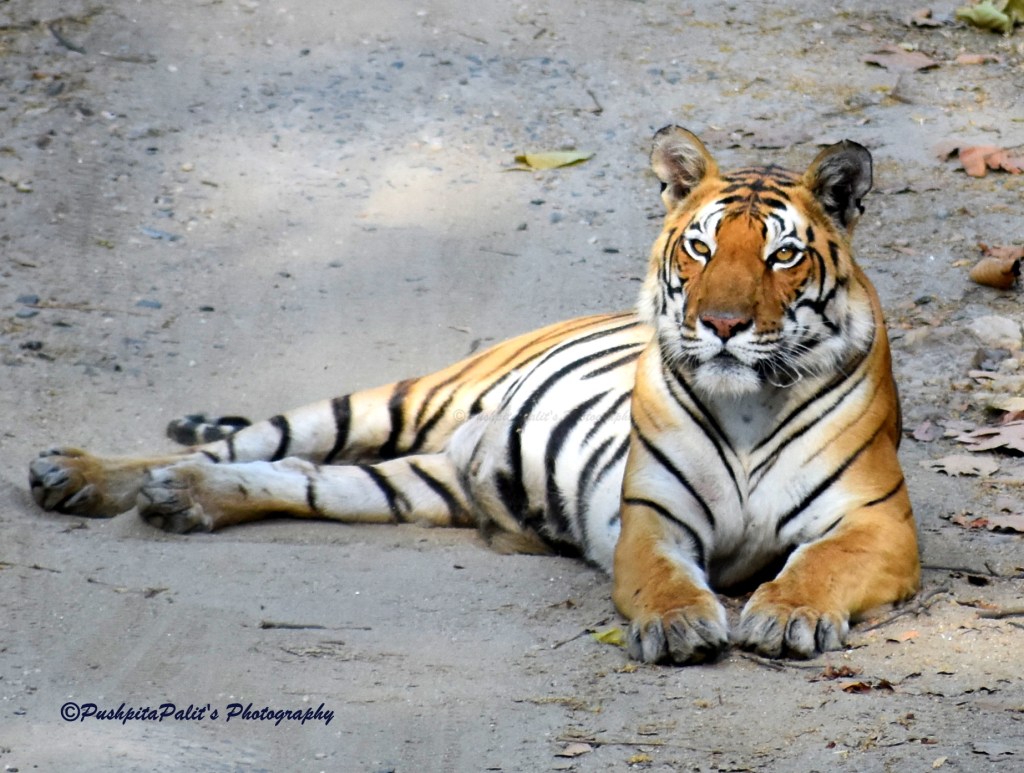
DhawaJhandi Female (T27) – “Her glare can turn the blood of a brave man into water. SHE CAME, SHE SAT, SHE SLEPT and then SHE WENT”
She is a 4-5 year old tigress, and already raised three cubs to adulthood earlier. Currently she is pregnant again. (We got a chance to encounter and photograph the huge male later that day. Encounter is described further below)
Tracking her was as thrilling as photographing her. On day 1, we got very close and could clearly hear her growl accentuated by distinct alarm calls from Langur Monkeys. But Alas we missed her, since she was too shy to expose herself to tourists ambushing her with Cameras near a water hole. (How could we tourists even think we could ambush a beast who was the master of this art). But certainly this tigress is extremely shy; or rather, that was our thought at least on day 1.
On day 2, morning, our guide heard very strong alarm calls, this time from Chital. We stopped on our tracks on the dusty road waiting and predicting from which bush she may reveal herself? Will she manage to dodge our sight again and evade as she did on day1? But then it happened.
Just about 80ft away behind us, something with a formidable frame and familiar orange hue adorned with black stripes was approaching. She was directly walking towards us and our driver ensured to maintain a distance.
She eventually halted and sat, giving us full 20 minutes to observe and photograph her. Only two vehicles, one behind her and the other one in front of her (us) got a chance to sight her that day. Yes, we were dam lucky as the guide told us, since this female was not as tourist friendly as others of her kind in Kanha. I could clearly see that, since as soon as a third vehicle arrived, she immediately got up and disappeared into the bush, scent marking a tree on her way.
She is locally called as the Dhawajhandi Female since her current territory once had a small tribal population who used to hang prayer flags or “jhandi” on a “Dhawa” Tree.
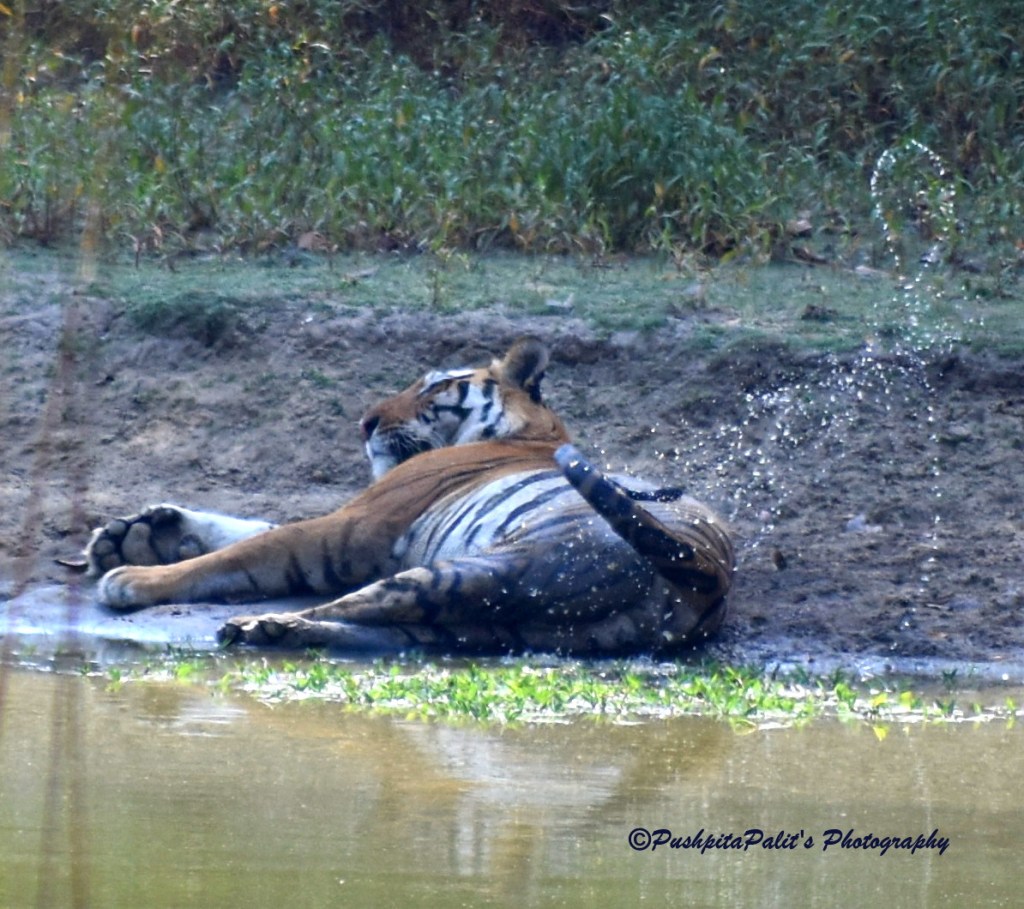
Link 7 Male – “The Summer Heat and It’s PAIN can’t upset a Tiger splashing water with his TAIL; But, when a frightened deer makes distress SOUND, it can wake up the Tiger to Look AROUND”
Our encounter with this male was hardly unpredictable and eventful. We were very well informed that this huge male was at a water hole lazing around and most of the Guides who knew him also knew what it meant – “this tiger was probably going to stay there for hours”.
When we saw him, he hardly moved, only occasionally swaying his tail to splash water over his enormous body. We got ample time to view him from a distance. Eventually he did get up to reveal his face. Not because we disturbed him, but because a barking deer was continuously making alarm calls and hopping around. Alas, the poor little deer hardly understood, the apex predator was not interested in food at that moment.
His expression was as if… “Hey give me a break and stop barking you stupid Muntjac… I am not going to eat you today. However, if you keep doing this… I may change my mind”
As far as we the tourists were concerned, we gladly thanked the cute little deer.
“With time a Naked Tree with fallen leaves may MEND
but also with time every reawakening experience in life will inevitably END.
However all that ends is never ever LOST,
since some of the fondest memories in life are cherished UTMOST”
As we moved out of the Mukki Range of Kanha Tiger Reserve, the same Gaur Herd that had greeted us earlier, graced with their presence in bidding us a warm “Good Bye”. As the Mahindra Xylo Wilson was driving, moved us further and further away from the vicinity of Mukki, my heart became melancholy however my sadness got suppressed as we discussed all our experiences again and again. My wife and me may have encountered a Tiger in the wild before, but Kanha gave us our first opportunity to photograph the majestic feline. It is the golden meadows of this landscape that gave us the first opportunity to observe the rarest Deer in the Indian Subcontinent. The National Park had a plethora of wild life and a rich ecosystem that has balanced in perfect harmony. The animal density in each and every patch of the jungle is tremendous and inspiring. I hardly had any more reasons to doubt a bit why Rudyard Kipling was so inspired by this beautiful place.
Like every other good or bad things in life, a reawakening and remarkable holiday has to end. Kanha was a special vacation for all of us. After 3 Nights and 4 days in wilderness, we wished unrealistically that time stopped indefinitely at innumerable moments when we were here at the largest National Park in Madhya Pradesh. We promised ourselves that we would keep coming back here to this ultimate jewel of Natural Wonder again whenever time allowed us with a narrow window of opportunity
Photographer: Pushpita Palit Content Writer: Diganta Bose
-
Featured
My First Blog Post
Be yourself; Everyone else is already taken. — Oscar Wilde. This is the first post on my new blog. I’m just getting this new blog going, so stay tuned for more. Subscribe below to get notified when I post new updates.
Follow My Blog
Get new content delivered directly to your inbox.
 An Enchanting Wilderness in the Heart of Central India